



Month: April 2026
Buying an Apartment with a View of a Parisian Monument
Owning a property in Paris whose windows frame the Eiffel Tower, Notre-Dame or the Sacré-Cœur is a market of its own. These apartments represent a tiny fraction of the total Parisian housing stock, change hands frequently off the public market, and command a premium of 15 to 40% above the average price per square metre in their arrondissement. For an expatriate buyer, a non-resident or simply someone with limited time, spotting them, visiting at the right moment and acquiring at the right price requires an intimate knowledge of the terrain and privileged access to off-market properties.
Homelike Home, property hunter in Paris since 2003, guides discerning buyers through this confidential search, from the initial brief through to the signing at the notary’s office.
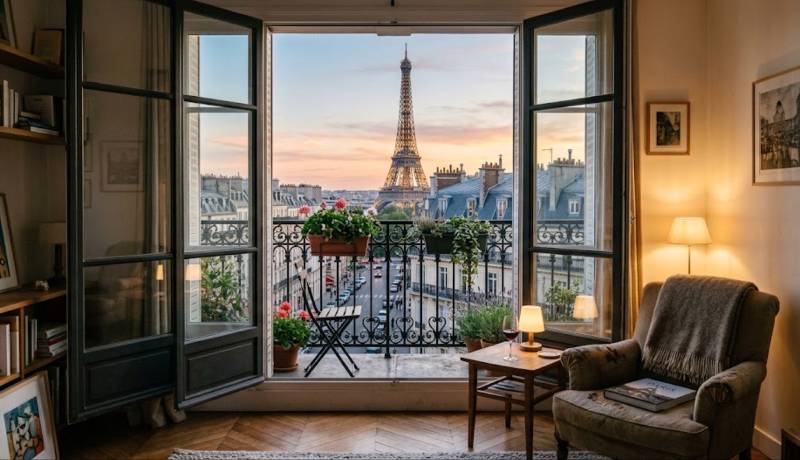
Which monument offer the most sought-after views
The Eiffel Tower leads the hierarchy of Parisian views. Apartments framing it are concentrated around the Champ-de-Mars in the 7th arrondissement, the heights of Trocadéro and Passy in the 16th, and the Front de Seine and Beaugrenelle on the 15th arrondissement side. A clear, centred view with the full structure visible is the absolute grail of the Parisian market.
Notre-Dame de Paris offers a more intimate perspective, accessible from the Île Saint-Louis, the quays of the 4th arrondissement and the Haussmann buildings of the 5th overlooking the Seine. The cathedral’s reopening in late 2024 has rekindled demand for these centuries-old views.
Sacré-Cœur is discovered primarily from Montmartre and the heights of the 18th arrondissement, as well as from certain taller buildings in the 9th. The upper floors of rue Lepic, rue des Martyrs and avenue Trudaine are among the most prized addresses in northern Paris.
Other landmarks structure this discreet market: the Arc de Triomphe and place de l’Étoile straddling the 8th, 16th and 17th arrondissements; the Invalides and its gilded dome in the 7th; the Panthéon in the 5th; the Louvre and its pyramids visible from the 1st arrondissement and the Left Bank; the Opéra Garnier in the 9th; and the obelisk on the place de la Concorde.
The criteria that truly make a difference
A monument view is not simply a matter of window orientation. Four parameters determine the real value of a property.
The long-term protection of the view is the first. In Paris, the local planning regulations (PLU) strictly govern building heights, but renovation or extension projects in a neighbouring co-ownership can cut into a previously open perspective. Checking the cadastral plan, verifying easements and studying protected heritage zones, in particular those listed by UNESCO along the banks of the Seine, is essential before signing any preliminary agreement.
The floor level and exact axis of the view matter just as much. A second-floor apartment with a sweeping lateral view often carries more value than a fifth-floor unit whose perspective closes onto a neighbouring building. The orientation of the openings, the depth of any balcony and the presence or absence of overlooking buildings must all be assessed carefully, ideally at different times of day.
The quality of the co-ownership is equally decisive. Voted-on facade restoration works, the condition of the common areas, and the rules governing balcony and terrace alterations all count: a poorly managed building can degrade the experience of an otherwise exceptional view and generate significant service charge calls in the first years of ownership.
Finally, acoustics and the noise environment of the address deserve an honest appraisal. Windows overlooking the Champ-de-Mars enjoy a calm far superior to those lining a busy thoroughfare such as avenue de New York. Traffic, restaurants at street level and tourist footfall all merit evaluation before committing.
Price ranges in Paris in 2026
The average price per square metre in Paris stabilises at around €10,500 in 2026, with marked variations by arrondissement. For properties offering a landmark view, the premium is significant.
In the 7th arrondissement with a centred Eiffel Tower view, transactions are recorded between €18,000 and €25,000 per sq m, and can exceed €30,000 per sq m for the upper floors overlooking the Champ-de-Mars. On the Trocadéro side (16th), the range runs from €16,000 to €22,000 per sq m. The 15th facing the Tower, in particular Beaugrenelle and the Front de Seine, trades between €12,000 and €16,000 per sq m on higher floors.
Views over Notre-Dame, from the Île Saint-Louis or the quays of the 4th and 5th, sit between €16,000 and €22,000 per sq m. A family apartment on Sacré-Cœur in Montmartre changes hands between €11,000 and €15,000 per sq m, with a clear premium for roof terraces. Properties with a Panthéon view oscillate between €13,000 and €17,000 per sq m.
These ranges reflect a segment where off-market transactions account for a significant share of premium deals: sellers of luxury Paris properties favour discretion over public listing.
Homelike Home, your property hunter for an exceptional view
Finding an apartment with a protected view over a Parisian landmark takes time, a network and a rigorous method. At Homelike Home Paris, a property hunting firm founded in 2003, our Paris expert guides each buyer through a structured process built around an exclusive buyer’s mandate.
The work begins with a precise brief: the targeted landmark, the desired perspective (centred, sweeping or lateral), minimum floor level, floor area, budget, noise tolerance and heritage requirements. Our in-depth knowledge of Paris’s premium arrondissements and our network of notaries, building managers and private owners gives us access to properties that rarely appear on public portals.
For each shortlisted property, we carry out the visit in person, verify the real quality of the view at different times of day, analyse the co-ownership regulations, the general assembly minutes, the technical condition of the building and the easements of the sector. A detailed report, accompanied by photos, videos and live video calls, is sent to you within 24 to 48 hours.
This method is particularly suited to expatriate and non-resident buyers for whom every trip to Paris represents a cost in time and money. Our clients based in Dubai, New York, London, Geneva or Singapore delegate the entire process to us, from prospecting through to the notarial signing, including negotiation, coordination of technical assessments and, where relevant, the investment structuring. Find out more about how our process works from mandate to signature.
Our property hunting fees
Our fees are due on the day of the final deed at the notary’s office, only in the event of a successful search. No cost is incurred until you have acquired a property.
They are calculated on a degressive rate schedule applied to the price recorded at the notary (agency fees included, excluding notary fees). In Paris, we begin searches from a budget of €350,000.
| Price bracket | Rate incl. VAT |
|---|---|
| From €0 to €600,000 | 2.90% |
| From €600,001 to €900,000 | 2.65% |
| From €900,001 to €1,200,000 | 2.25% |
| From €1,200,001 to €1,500,000 | 2.00% |
| From €1,500,001 to €2,500,000 | 1.50% |
| Above €2,500,001 | 1.00% |
Start your search for an apartment with a view
Whether your preference is a pied-à-terre facing the Eiffel Tower, a duplex on the rooftops of Montmartre or a Haussmann apartment on the banks of the Seine, our Paris expert has the tools, the network and the method to turn this search into a successful acquisition.
Contact Homelike Home for a first confidential conversation and let us define together the precise scope of your project. Our team is also at your service through our agencies across France and in Milan for any demanding property search.
Investing in French Real Estate from the United States
You live in New York, Los Angeles, San Francisco or Miami. Your income is in dollars, your daily life is American, but your assets are something you want to keep anchored in France. Preparing a return, securing a property for your children, building savings in euros away from the volatility of financial markets: the reasons French nationals and French-speaking residents of the United States invest in French property are precise and strategic.
The six-to-nine-hour time difference depending on your coast, the impossibility of visiting a property quickly, and the banking constraints linked to US tax status are concrete realities, but they are not insurmountable obstacles. For more than twenty years, Homelike Home has been supporting expatriates and international buyers who purchase in France from abroad, with a tailored search mandate, in-person pre-visits, detailed reports and video calls scheduled around your planning constraints. You stay in the United States; we handle the ground work.
Here is what you need to understand in order to invest from the United States in an effective and secure way.
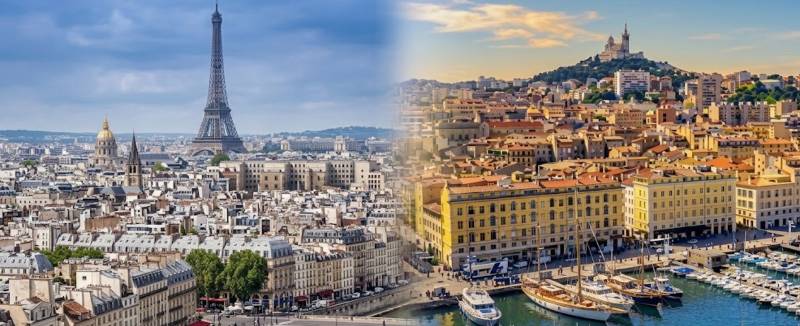
Why invest in French real estate when you live in the United States
The American real estate market is dynamic but expensive, with mortgage rates that have shifted significantly in recent years and prices in major cities that make ownership increasingly difficult. In this context, France offers a serious wealth-building alternative: a regulated market, solid legal protection, and rental demand that is structurally higher than supply in major cities.
Regional metropolises like Lyon and Marseille allow you to target gross rental yields of between 4.5% and 6%, with vacancy rates often below 1.5% in high-demand zones. Paris delivers a more contained gross return of around 3 to 3.5%, but with long-term capital appreciation that is hard to dispute.
Your income is in dollars. Building a portfolio in euros represents genuine currency diversification and a natural hedge against exchange rate volatility. If your life plan includes a return to France in the medium or long term, or if you want your children to have somewhere to live during their studies in France, real estate is the most concrete tool available for building that foundation.
Franco-American taxation: the most important point to anticipate
This is without doubt the most specific complexity for US-based residents, and it must not be overlooked. As with investing in French real estate from Dubai or from other countries, the tax framework requires careful upfront planning.
A more demanding tax situation than in most countries
Unlike residents of many other countries, American citizens and green card holders are taxed by the United States on their worldwide income, regardless of where they actually live. This means your French rental income must be declared both in France and in the United States. The Franco-American tax treaty provides mechanisms to prevent effective double taxation, primarily through a foreign tax credit, but the dual filing obligation remains and requires guidance from a tax advisor familiar with both systems.
On top of this comes the FBAR obligation (Report of Foreign Bank and Financial Accounts) if you hold one or more French bank accounts whose combined balance exceeds $10,000 at any point during the year. Non-compliance exposes you to significant penalties.
The LMNP scheme from the United States: still relevant, but needs framing
The non-professional furnished rental status (LMNP) under the réel tax regime remains one of the most effective tools for reducing your taxable base in France. The accounting depreciation of the property, works and furnishings brings French taxable income to zero in the majority of cases. However, this outcome must be coordinated with your American return, where depreciation rules differ. A bicultural accountant is essential to optimise the structure on both sides of the Atlantic.
Bare ownership (nue-propriété): a strategy particularly suited to US residents
Buying in démembrement is of particular interest to US residents who want to avoid any declaratory complexity in France. By transferring the usufruct to an institutional lessor for fifteen years, you receive no rental income during that entire period: there is therefore nothing to declare in France or the United States in relation to this asset. You buy at a discount of 30 to 40% on the market price and recover full ownership of an appreciated property at the end of the period. It is a clean wealth accumulation strategy with no intermediate tax friction.
Which investment strategy to prioritise from the United States
Long-term furnished rental (LMNP)
This is the most common strategy for expatriates seeking to generate regular rental income. A well-located furnished apartment in a university city or a dynamic metropolis lets easily, with a very favourable French tax treatment thanks to depreciation. The condition is to delegate property management entirely to a professional on the ground. This delegation is non-negotiable from the United States: you cannot manage rental emergencies from a time zone nine hours away.
Unfurnished letting should be avoided. Rental income is taxed in France at a minimum rate of 20%, to which social levies of 17.2% are added, with no depreciation allowance. The gap with LMNP is significant over a ten-year horizon.
Off-plan new build (VEFA)
Buying off-plan suits profiles who want to minimise remote management constraints. The ten-year structural guarantee, the absence of immediate renovation works and recent construction standards reduce uncertainty during the first years. Notary fees are lower than for existing properties. The drawback is a slightly lower gross yield and delivery timelines that need to be factored into your planning.
Older properties with renovation potential
This is the strategy with the highest appreciation potential, particularly in markets where renovated properties resell at a significant premium. It also allows you to optimise LMNP depreciation by incorporating the cost of works. It is, however, the most demanding to manage from the United States: without a property hunter in France or a delegated project manager present on site, the risks of cost overruns are significant. Professional local support is non-negotiable here, from property selection through to works completion.
SCPIs: entering the market without any management burden
SCPIs (French real estate investment trusts) allow you to invest in French real estate with an accessible entry ticket, no direct management and immediate diversification across several hundred assets. Returns run around 4 to 5% net, paid quarterly. Be aware, however, that SCPIs also carry a Franco-American tax dimension. Prior advice from an expert in both systems is recommended before subscribing.
Bare ownership
As mentioned above, this is the cleanest strategy from a tax standpoint for a US resident. No management, no income to declare for fifteen years, and long-term wealth accumulation with an attractive entry discount. Ideal for high-income profiles who do not need immediate liquidity on the French side.
Homelike Home, your point of contact in France
For more than twenty years, Homelike Home has been supporting non-resident buyers who want to invest in France without being on the ground. We work exclusively on your behalf, as a search agent, with no ties whatsoever to sellers or developers. Learn more about our end-to-end process works in practice.
Here is how a project from the United States unfolds. We frame your project together, taking into account your actual objectives: rental return, preparing a return to France, a property available for your children, or simply building a euro-denominated portfolio. We then carry out physical visits on your behalf and send you comprehensive reports with photos, videos and our critical analysis of each property. We organise video calls on time slots compatible with your time zone so you can picture yourself in the property and ask your questions. When a property fits, we negotiate the price in your name. The deed can be signed by proxy at the notary’s office, with no need to cross the Atlantic.
We operate across the whole of France, with property hunters in every major city in our network: Paris, Lyon, Bordeaux, Marseille, Nice, Nantes and beyond.
Contact our team to start a first no-commitment conversation, at a time that works for you.
Luxury Apartment Hunter in Paris: accessing the capital’s most discreet market
Buying a luxury apartment in Paris is not simply a matter of setting a high budget and browsing property listings. The prestige segment, which covers properties above two million euros and peaks beyond thirty million for truly exceptional units, operates by its own rules. The overwhelming majority of transactions take place off the public market, through the quiet networks of notarial offices, family offices and a handful of specialist property hunting firms. For a buyer, finding the right property at the right moment and the right price requires a privileged access that no property portal can provide.
This is precisely what Homelike Home offers: a Paris-based property hunting firm founded in 2003. Our team guides discerning buyers through the search for prestige apartments in Paris, with privileged off-market access and a method built entirely around exceptional properties. Contact our Paris experts to define the framework of your search.
What is a luxury apartment in Paris?
The term “luxury apartment” covers a more precise reality in Paris than a simple price threshold. A prestige property combines several cumulative criteria that are rarely all found within the same walls.
The address and the building come first. A luxury apartment sits within a building of character — a private mansion (hôtel particulier), a top-tier Haussmann building, a signed Art Deco residence or a prestigious contemporary construction — located in one of the historically premium arrondissements. The quality of the street, the presence of upscale retailers and immediate peace and quiet count as much as the façade itself.
Interior volumes and finishes come next. Ceiling heights typically exceed three metres, reception rooms follow one another en enfilade, Versailles or Hungarian-point parquet floors are original, marble fireplaces remain in place, and mouldings and ceiling roses are intact. A prestige family apartment offers at least 150 to 200 sq m of floor space, with bedrooms each served by their own bathroom.
Light, views and outdoor extensions. An exceptional property benefits from double exposure, generous windows, and sometimes a Haussmann-style wrap-around balcony or a full terrace. The view may itself be a heritage asset: overlooking a Parisian monument, a private garden or a listed perspective, which constitutes a standalone value driver.
Building services finally. A full-time concierge, a next-generation lift, common areas maintained to five-star hotel standards, a cellar, secure parking, a bicycle room, and in some contemporary high-end buildings a swimming pool or fitness suite. A rigorous co-ownership agreement and a well-funded service charge budget ensure that these standards are maintained over time.
In Paris, prices in the luxury segment start at around €15,000 per sq m and commonly reach €25,000 to €35,000 per sq m for the most sought-after properties, with peaks beyond €40,000 per sq m on the iconic addresses of the Golden Triangle or along the Champ-de-Mars with an Eiffel Tower view.
The three flagship arrondissements for a luxury apartment in Paris
While seven Parisian neighbourhoods concentrate most of the premium market, three arrondissements have historically dominated the prestige hierarchy and account for the bulk of transactions above €20,000 per sq m.
The 7th arrondissement: Champ-de-Mars, Invalides, Gros-Caillou
The 7th is regarded by many international buyers as the absolute address for Parisian luxury. The quadrilateral bounded by the Champ-de-Mars, avenue Bosquet, rue Saint-Dominique and the Invalides concentrates a stock of top-tier Haussmann buildings, often featuring large family apartments of 200 to 400 sq m. Views over the Eiffel Tower, proximity to leading schools and embassies, and a residential calm that is rare at the heart of Paris justify prices ranging from €16,000 to €25,000 per sq m, with records beyond €35,000 per sq m for apartments with a centred tower view.
The buyer profile is primarily composed of established French families, returning expatriates and international buyers — American, British and Middle Eastern — drawn by the proximity of the Lycée international and prestigious private schools. Our Paris property hunting team monitors off-market properties in this ultra-tight sector continuously, where the annual number of luxury-segment transactions rarely exceeds a few dozen.
The 8th arrondissement: Golden Triangle and Plaine Monceau
The 8th embodies Parisian power in its most spectacular form. The Golden Triangle, delimited by avenues George V, Montaigne and the Champs-Élysées, is home to the most expensive apartments in the capital. Properties here trade between €18,000 and €28,000 per sq m, with records regularly exceeding €35,000 per sq m for apartments on avenue Montaigne, rue François 1er or place de l’Alma.
The Plaine Monceau district, around the eponymous park, forms the second luxury hub of the 8th. More family-oriented and more residential, it attracts buyers seeking a green setting without sacrificing prestige. Private mansions and Haussmann apartments overlooking the park trade between €15,000 and €22,000 per sq m. Our Paris property finders cover this entire demanding territory, where the bulk of prestige properties never appear on public portals.
The 6th arrondissement: Saint-Germain-des-Prés and Odéon
On the Left Bank, the 6th arrondissement offers a different expression of Parisian luxury: more intellectual, more understated, and deeply rooted in the cultural history of the capital. Around rue de Seine, rue Jacob, boulevard Saint-Germain and place Saint-Sulpice, characterful apartments change hands between €17,000 and €24,000 per sq m, with a clear premium for properties featuring exposed beams, Versailles parquet and generous ceiling heights.
The neighbourhood attracts a clientele of connoisseurs: publishers, gallerists, art collectors, intellectual professionals and international investors who prize cultural authenticity above external standing alone. Our Paris agency has an in-depth knowledge of this fabric of 17th, 18th and 19th-century buildings where every staircase tells a part of Parisian history.
Why work with a real estate expert specialising in luxury
Buying a prestige apartment in Paris presents four specificities that make working with a dedicated property hunter particularly relevant.
The off-market dominates. In the segment above two million euros, the majority of transactions take place without any public listing. Sellers favour discretion, refuse multiple viewings and select their buyers through trusted intermediaries. Without access to these channels, a buyer sees only a fraction of the real market.
Exceptional properties demand rigorous technical analysis. Structural condition of the building, quality of the façade restoration, history of general assembly minutes, administrative regularity of interior alterations, planning easements and heritage constraints (ABF, protected sector): a prestige apartment can conceal costly defects beneath a perfect appearance.
Negotiation plays on multiple parameters. Price, signing timeline, conditions precedent, specific clauses, included furnishings, works allocation: each element is subject to an arbitration that only an experienced professional can conduct effectively opposite notaries and high-end vendors.
Confidentiality is non-negotiable. Buyers of prestige properties, often company directors, public figures or international high-net-worth individuals, require complete discretion. A serious property hunter protects the identity of their clients throughout the entire process, from first contact through to the final deed.
The Homelike Home method for luxury apartments
Since 2003, Homelike Home has been working with demanding clients on the Paris prestige market through a structured method. Learn more about how our process works from mandate to signature.
The work begins with a precise brief: target arrondissement, floor area, typology, ceiling height, heritage requirements, proximity to international schools, budget and tolerance for works. From this framework, our Paris expert activates their network of notaries, building managers, wealth managers and property owners to identify matching properties, including those not yet publicly listed.
Each selected property is visited in person by our expert. We verify the real quality of light, exposure and views at different times of day, analyse the co-ownership regulations, the last three general assembly minutes, technical diagnostics, sector easements and the property’s history. A detailed report, accompanied by photos, videos and live video calls, is sent to you within 24 to 48 hours.
This approach is particularly suited to expatriate and non-resident buyers based in Dubai, New York, London, Geneva, Singapore or Tel Aviv, for whom every trip to Paris represents a significant cost in time. We handle the entire process, from prospecting through to the notarial signing, coordinating supplementary technical expertise where needed — architect, structural engineer, interior designer.
For a broader view of the French market and why buying property in France makes strategic sense for international buyers, our dedicated guide covers the key points.
Our property hunting fees
Our fees are due on the day of the final deed at the notary’s office, only in the event of a successful search. No cost is incurred until you have acquired a property.
They are calculated on a degressive rate schedule applied to the price recorded at the notary (agency fees included, excluding notary fees). In Paris, we begin searches from a budget of €350,000.
| Price bracket | Rate incl. VAT |
|---|---|
| From €0 to €600,000 | 2.90% |
| From €600,001 to €900,000 | 2.65% |
| From €900,001 to €1,200,000 | 2.25% |
| From €1,200,001 to €1,500,000 | 2.00% |
| From €1,500,001 to €2,500,000 | 1.50% |
| Above €2,500,001 | 1.00% |
On the luxury segment, the effective average rate converges toward 1.5 to 2%, which positions Homelike Home among the most competitive operators in the Paris market for transactions above two million euros.
Start your luxury apartment search in Paris
Whether you are looking for a 250 sq m family apartment in the 7th, a pied-à-terre in the Golden Triangle or a characterful duplex in Saint-Germain-des-Prés, our team guides you through a structured, confidential and results-driven process.
Contact our Paris property hunting team for a first confidential conversation. We will define together the precise scope of your project and present our strategy for accessing the off-market properties that match your brief.
Investing in French Real Estate from New York City
New York brings together two distinct profiles, each with their own real estate project in France. French executives on expat assignments in finance or tech, looking to build a euro-denominated asset base while living in the United States. And American buyers drawn to France: a pied-à-terre in Paris, a house in Provence, an apartment on the French Riviera as a foundation for a European retirement. The motivations differ, but the obstacles are often the same: 6,500 kilometers of distance, a six-hour time difference, and a Franco-American tax framework that requires careful navigation.
For more than twenty years, Homelike Home has been supporting expatriates and international buyers investing in France from abroad: a tailored search mandate, in-person pre-visits, detailed reports, video calls scheduled around your time zone, and full coordination through to signature. You stay in New York; we handle the ground work.
Why invest in France from New York
For a French expat, investing during an assignment is a window of opportunity: higher income, stronger savings capacity, and the ability to either prepare a smooth return to France or generate rental income in euros throughout the American chapter. Major regional cities like Lyon and Nantes deliver gross yields between 4.5% and 6%, at entry prices that bear no comparison with New York.
For an American buyer, France answers a lifestyle logic as much as a financial one. Paris remains one of the most sought-after cities in Europe by international buyers, with a depth of market and long-term asset value that hold up over time. Nice, Aix-en-Provence and the Basque Country combine a Mediterranean or Atlantic setting with sustained rental demand. Investing in euros also represents genuine currency diversification for a buyer whose income is denominated in dollars.
What distance from New York really changes
A well-positioned apartment in Paris or Lyon can be gone within 24 to 48 hours. French agencies call back during your morning meetings. And by the time you are free at the end of the day, it is 10pm in France. Without a team capable of visiting and acting immediately on the ground, you miss the best opportunities or you make decisions based on incomplete information.
At Homelike Home, our property finders across France carry out physical visits on your behalf, send you comprehensive reports including photos and videos, and organize video calls on time slots that work with the New York time zone. When a property fits, we negotiate the price in your name. The signing can be completed by proxy at the notary’s office, with no need to cross the Atlantic.
Franco-American taxation: the crucial point
This is the most specific complexity for US-based buyers. American citizens are taxed on their worldwide income, regardless of where they live. Your French rental income must therefore be declared both in France and in the United States. The Franco-American tax treaty provides a tax credit mechanism to avoid effective double taxation, but the dual filing obligation remains. A tax advisor familiar with both systems is essential.
If you hold one or more French bank accounts whose combined balance exceeds $10,000 at any point during the year, an FBAR filing is also required. Non-compliance exposes you to significant penalties.
For French nationals living in the United States without American citizenship, the situation is simpler: your French rental income is taxed in France, with double-taxation neutralization mechanisms that apply depending on your exact tax status in the US.
The LMNP scheme under the réel tax regime remains in both cases the most effective strategy for neutralizing French tax exposure. The accounting depreciation of the property, works and furnishings brings taxable French income to zero in the vast majority of situations, which considerably simplifies coordination with your American tax return.
Bare ownership (nue-propriété) is particularly well suited to high-income New York profiles: no income received for fifteen years, meaning nothing to declare in France or the United States in relation to this asset. You buy at a discount of 30 to 40% and recover full ownership of an appreciated property at the end of the period.
Financing: anticipating FATCA
The FATCA legislation has led some French banks to be cautious toward American nationals. Lenders specializing in non-resident financing remain accessible, but the file must be airtight: a personal deposit of 25 to 35%, dollar-denominated income documents translated and certified, and recent American tax returns. A broker specializing in expatriates helps you avoid rejections linked to US status and identify the most responsive institutions for your profile. An all-cash purchase remains a solid alternative when financing proves too restrictive.
What strategy suits your profile
Long-term furnished rental (LMNP) is the reference choice for generating regular rental income with controlled taxation. It requires full delegation of property management to a professional on the ground: managing emergencies from New York with a six-hour time difference is simply not viable.
Off-plan new build (VEFA) suits buyers who want to minimize distance-related constraints: ten-year structural guarantee, no immediate renovation works, reduced notary fees.
Older properties with renovation potential offer the highest appreciation upside, but require rigorous local oversight. A property hunter or a delegated project manager on site is non-negotiable when buying from the United States.
SCPIs (real estate investment trusts) allow you to enter French real estate with no direct management, an accessible ticket size, and immediate diversification. Returns run around 4 to 5% net, paid quarterly. Distributed income remains subject to French non-resident taxation and must be incorporated into your American return: prior tax advice is strongly recommended.
Homelike Home, your partner in France
For more than twenty years, Homelike Home has been supporting French and international buyers who invest in France from abroad. We work exclusively on your behalf, as a buyer’s agent, with no ties to sellers or developers. Discover why buying in France makes sense and how our tailor-made process works from mandate to signature.
We operate across the whole country, with property hunters throughout France and a team that has already guided many buyers through acquisitions in Paris, Lyon, Bordeaux, Nice and beyond.
Contact our team for a no-commitment first conversation, at a time that works for you.
Investing in French Real Estate from Switzerland
You live in Geneva, Zurich, Basel or Lausanne. Your income is in Swiss francs, often substantial, and your capacity to save is real. But building lasting wealth in France, preparing a future return, securing a home for your children, or simply diversifying your capital into euros: these are concrete goals shared by thousands of French nationals and international residents based in Switzerland.
The geographical proximity is an advantage: France is two hours by car from Geneva, and there is no time difference. But the administrative, fiscal and operational distance is real. Finding the right property, visiting it at the right moment, negotiating and coordinating a project remotely alongside a demanding professional schedule: this is where the right support makes all the difference. For over twenty years, Homelike Home has helped expats and international buyers invest in French real estate from abroad, with a tailored search mandate, physical pre-visits, detailed reports and full project coordination through to signing.
Here is everything you need to know to invest from Switzerland in a structured and optimised way.
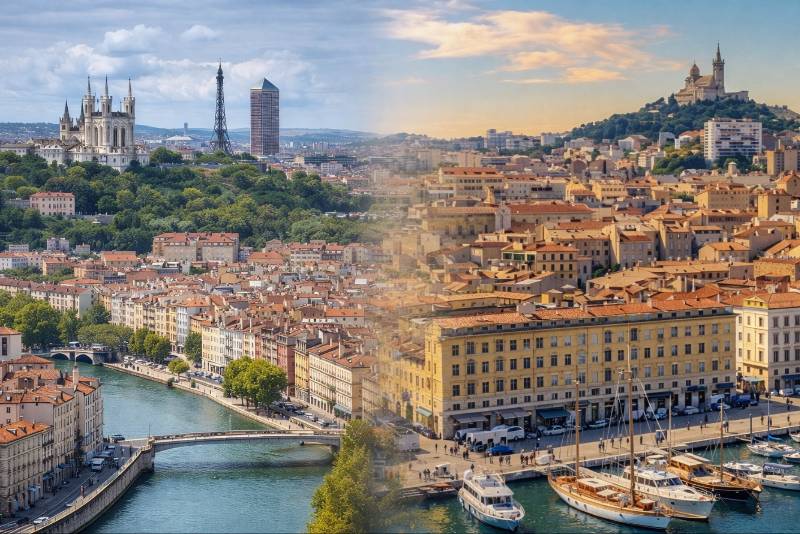
Why French real estate makes sense from Switzerland
Switzerland protects purchasing power well, but offers limited accessible real estate investment opportunities. Property prices in Geneva or Zurich are among the highest in Europe, rental yields are very low, and access to ownership remains complex for non-Swiss nationals.
France, just a few kilometres away, tells a very different story. A more liquid market, gross rental yields of 4.5% to 6% in major regional cities like Lyon or Nantes, structural rental demand that consistently outpaces supply in university cities and dynamic metropolitan areas, and solid legal protection for landlords. Paris offers a more modest gross yield of around 3 to 3.5%, but with long-term capital appreciation that few markets can match.
Your income is in Swiss francs (CHF). Investing in euros represents genuine monetary diversification: you build wealth denominated in a different currency, which reduces your exposure to CHF fluctuations and financially prepares a potential return to France. For many expats based in Switzerland, this patrimonial and emotional dimension matters at least as much as the yield itself: owning property in France means maintaining a tangible anchor in the country.
What the distance from Switzerland actually changes
Switzerland is close. But that proximity can be deceiving. Executives and professionals based in Geneva or Zurich have demanding schedules, rarely compatible with the pace of the French property market: weekday viewings, very short decision windows, and the need to react quickly when a well-priced property goes live.
A sought-after apartment in Lyon or Marseille can be gone within 48 hours. Even from Geneva, travelling at short notice to view a property is not always possible. Without a trusted representative able to act immediately on the ground, you either miss the best opportunities or make decisions based on insufficient information.
This is precisely where a property finder makes the difference. At Homelike Home, our hunters carry out physical visits on your behalf, assess each property critically, and send you a full report including photos, videos and their honest analysis. We schedule regular calls or video meetings to keep you fully involved at every step, without requiring you to travel for each stage. When a property matches your project, you can make your decision with complete confidence.
The France-Switzerland tax framework: key points to understand
Switzerland does not tax its residents on worldwide income in the same way as the United States. The tax situation for a Swiss resident investing in France is therefore less complex than for an American buyer, but it does carry several specific features that need to be anticipated.
The France-Switzerland tax treaty
France and Switzerland have signed a tax convention that organises how taxing rights are divided between the two countries. French-source real estate income is taxed in France, with a tax credit or exemption applied in Switzerland to avoid effective double taxation. In practice, you must declare your French rental income in France, and your Swiss tax adviser will integrate this into your cantonal return according to the applicable rules.
Social levies: a point often underestimated
As a Swiss resident, you are not affiliated to the social security system of a European Union member state. You are therefore subject to French social levies at the full rate of 17.2% on your French rental income, on top of income tax. This element is frequently overlooked and has a real impact on net yield. This makes the LMNP furnished rental scheme under the real accounting regime even more strategically valuable: by bringing the taxable base to zero through depreciation, it neutralises both income tax and the basis on which social levies are calculated.
Furnished rental (LMNP): the benchmark strategy
Renting your property furnished places you under the Industrial and Commercial Profits (BIC) regime rather than the standard rental income framework. The accounting depreciation of the property, renovation works and furniture allows you, in the vast majority of cases, to bring your French taxable income to zero. This is the most effective structure for a Switzerland-based investor seeking regular rental income without tax pressure in France. A cross-border accountant familiar with both systems will ensure this mechanism is correctly articulated with your Swiss tax return.
Wealth tax (IFI): a threshold to monitor
If the net value of your French real estate assets exceeds 1.3 million euros, you become liable for the Impôt sur la Fortune Immobilière (IFI), even as a non-resident. This mainly concerns investors who already hold several properties or who are buying in premium markets such as Paris. This threshold should be factored into your overall wealth strategy, particularly if you plan to make several purchases over time.
Bare ownership (nue-propriété): a clean, declaration-free approach
For buyers who do not need immediate rental income and want to avoid any cross-border tax complexity, purchasing the bare ownership (nue-propriété) of a property is particularly well-suited. You buy the property at a 30 to 40% discount to its market value, transferring the usufruct to an institutional landlord for fifteen years. During that entire period: no management, no property tax, no rental income to declare, and therefore no taxation in France to coordinate with your Swiss situation. At the end of the dismemberment period, full ownership reverts to you automatically, on a property that has appreciated in value, with no tax on the gain resulting from the reassembly.
Financing from Switzerland: generally accessible conditions
This is one of the concrete advantages Swiss residents hold over other expat profiles: access to mortgage financing in France is generally more straightforward. French banks specialising in non-resident lending know Swiss files well, and some Swiss institutions themselves offer financing on properties located in France, particularly for cross-border buyers near the frontier.
Plan for a personal contribution of 20 to 30% and a thorough documentation file: salary slips in CHF with a certified conversion, bank statements, Swiss tax return, and where applicable, your residence permit (Permit B or C). A broker specialising in expat and non-resident financing can significantly accelerate the process and direct you toward the most responsive lenders for your profile.
Cross-border workers (frontaliers) who reside in France while working in Switzerland hold a specific advantage: they have access to French resident financing conditions, which are often more favourable. If this is your situation, it warrants a dedicated analysis.
Which investment strategy to choose from Switzerland
Furnished long-term rental (LMNP)
This is the most effective strategy for generating regular rental income with controlled taxation in France. A well-located furnished property in a university city or a dynamic metropolitan area rents reliably, with very low vacancy rates. The non-negotiable condition from Switzerland is to hand over property management entirely to a professional on the ground: tenant selection, check-ins and check-outs, day-to-day management. This delegation is the foundation of your peace of mind, even when France is only two hours away by road.
Unfurnished rental remains a structure to avoid for non-residents: the minimum income tax rate of 20%, combined with social levies at 17.2%, significantly erodes net yield compared to the LMNP scheme.
New-build (VEFA)
Off-plan purchasing suits investors who want a property free of immediate works, backed by strong construction warranties and reduced notary fees. It is a comfortable structure to manage from Switzerland, with few operational risks in the early years. Gross yield is slightly lower than in the existing stock, but the management simplicity often compensates for this gap for buyers who do not want direct operational involvement.
Period property with renovation works
This is the strategy with the highest value-creation potential, particularly in cities where quality renovation generates a significant price premium at resale. It also allows optimised depreciation under LMNP by incorporating renovation costs into the depreciable base. However, it demands rigorous local oversight: without a property finder or a delegated project manager on site, the risk of cost overruns and poor workmanship is difficult to control from Geneva or Zurich. End-to-end professional support is essential here, from property selection through to works completion.
Family SCI (Société Civile Immobilière)
The SCI is of particular interest to Switzerland-based investors who want to organise the transmission of their French assets to their children, or structure joint ownership within a family across borders. It is not a tax optimisation tool for day-to-day management, but it considerably simplifies successions and the administration of jointly-held assets between non-resident partners. This should be discussed with a notary or wealth adviser familiar with both legal systems.
SCPIs (real estate investment trusts)
SCPIs allow you to invest in French real estate with an accessible entry ticket, no direct management constraints and immediate diversification across several hundred assets. Returns are typically around 4 to 5% net, paid quarterly. This is a relevant option for building an initial euro-denominated portfolio before considering a direct purchase, or for diversifying an existing real estate portfolio. Income distributions remain subject to French non-resident taxation: preliminary advice is recommended to integrate this income stream into your overall Franco-Swiss situation.
Homelike Home: your dedicated property finder in France
For over twenty years, Homelike Home has supported international buyers who invest in France from abroad. We work as your exclusive buyer’s agent, with no connection to sellers or developers: our sole objective is to find the property that matches your project, at the best possible price. Find out why investing in French real estate is a sound long-term decision.
From Switzerland, a Homelike Home project works as follows. We define your objectives together: rental income, preparing a return to France, a property available for your children in the future, building euro-denominated wealth. Our hunters carry out physical visits on your behalf and send you complete reports with photos, videos and their critical assessment of each property. We schedule regular calls or video meetings so you remain fully involved without having to multiply trips. When the right property is found, we negotiate the price on your behalf. Signing can be handled by power of attorney at the notary’s office, with no need for you to travel on the day of completion.
We operate across the full French territory with several Property Finders Agencies.
Contact our team for a first conversation with no commitment, at a time that works for you.